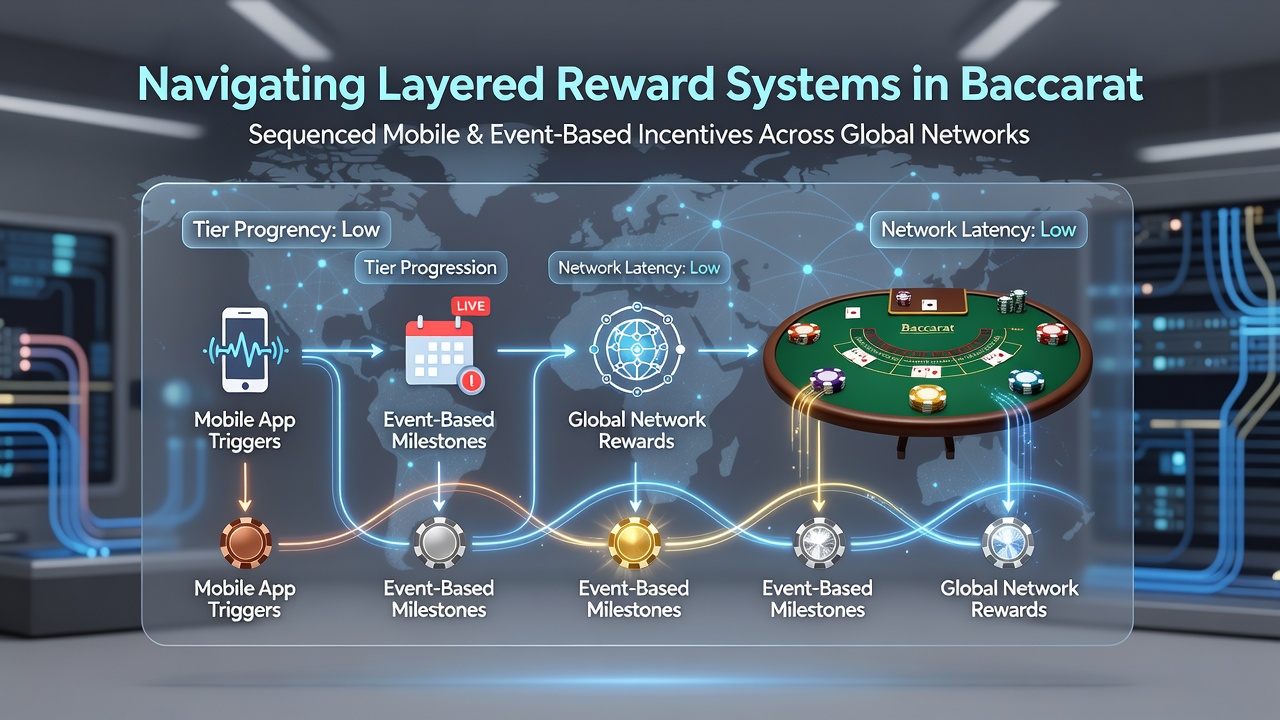
Global Baccarat Networks Leverage Sequenced Mobile and Event Incentives for Layered Rewards
Operators in major gaming jurisdictions structure baccarat reward programs around sequenced mobile credits and event-based triggers that span multiple regions, and players who track these sequences often unlock progressive status levels through coordinated redemptions. Research from industry reports shows that mobile applications now serve as primary entry points for initial reward layers while live events at international venues provide the next tier of accumulation.
Mapping Initial Mobile Layers in Baccarat Systems
Many platforms initiate reward sequences when users complete registration and first deposits through dedicated apps, and these steps feed directly into point pools that carry forward to subsequent stages. Data from the American Gaming Association indicates that mobile-driven baccarat play accounted for rising shares of total table game volume in several U.S. markets during 2025 and early 2026. Players receive base credits that convert into status points once certain wagering thresholds are met, after which the system automatically queues the next available event trigger.
Those who monitor app notifications find that sequenced incentives frequently align with calendar events such as regional tournaments or promotional windows, and this alignment creates pathways that extend across time zones. Observers note that platforms in Asia-Pacific and European networks synchronize their mobile interfaces to recognize activity from partner venues, thereby allowing points earned on one continent to contribute toward eligibility on another.
Event-Based Triggers and Cross-Network Progression
Event calendars at properties in Macau, Las Vegas, and Singapore incorporate baccarat-specific tournaments that award additional layers once mobile milestones are verified, and verification occurs through unique codes or account linkages. Figures released by the Nevada Gaming Control Board show steady integration between digital tracking systems and on-property events, which reduces manual reconciliation and speeds status updates. Participants who sequence their activity around these events often maintain continuous progression rather than starting new point cycles each month.
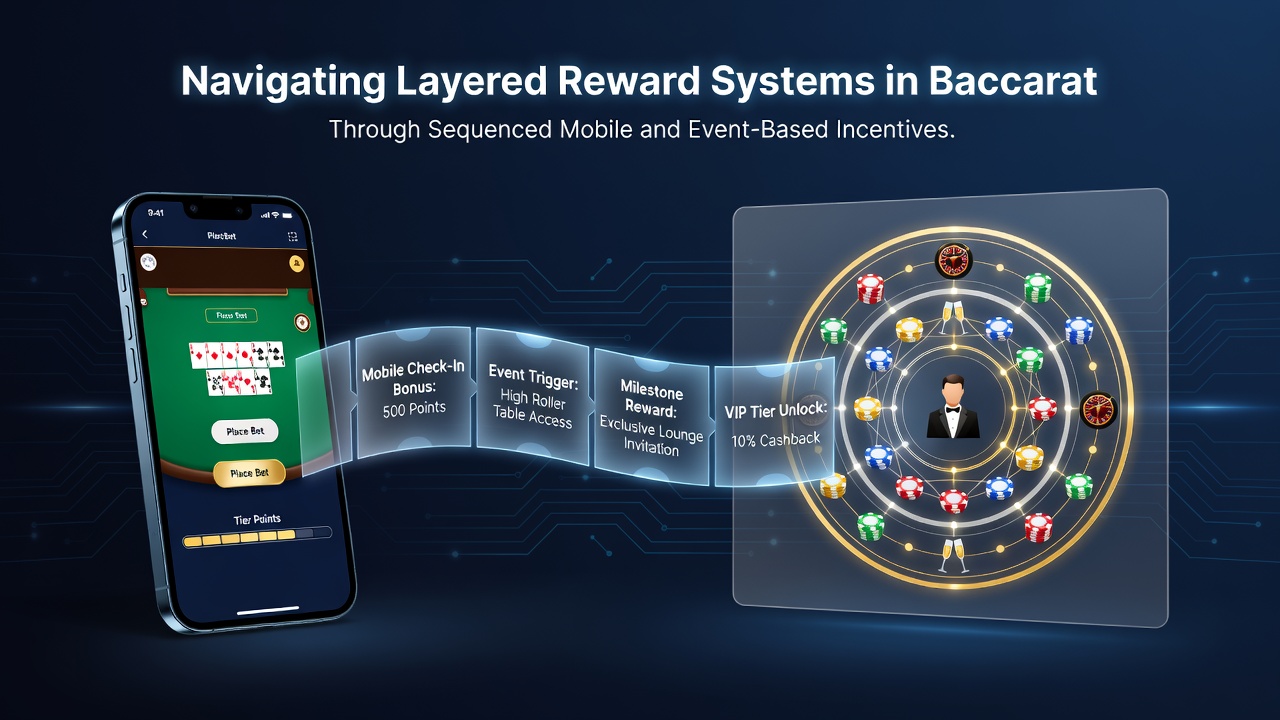
International operators have introduced shared databases that log mobile redemptions alongside physical event attendance, and this infrastructure supports cumulative benefit calculations across borders. A study published by researchers at the University of Nevada, Las Vegas examined how such linked systems affect player retention in multi-jurisdiction networks and found measurable increases in session frequency when incentives were presented in clear sequence order.
Regional Variations in Sequencing Mechanics
Regulatory frameworks in different regions dictate the pace at which mobile and event layers combine, and operators adjust their timelines accordingly. In Australia, state-level oversight requires clear disclosure of how event entries convert into mobile credits, while Canadian provincial systems emphasize audit trails for cross-border point transfers. Platforms that operate in multiple markets therefore maintain region-specific sequencing rules that still feed into a unified global ledger.
August 2026 marks the scheduled rollout of updated interface standards in several Asian and European networks, and these changes aim to streamline code entry for mobile users who plan participation in later-year tournaments. Industry groups such as the European Gaming and Betting Association have published guidance documents that outline best practices for maintaining transparent progression paths across these updates.
Practical Tracking Methods Observed in the Field
Players who maintain separate logs for mobile redemptions and event confirmations report fewer interruptions in status advancement, and some platforms now offer built-in dashboards that display pending layers and upcoming triggers. Casino hosts in major venues coordinate with app teams to flag sequences that align with scheduled high-roller gatherings, thereby creating targeted opportunities for eligible accounts. These coordination efforts rely on encrypted data exchanges that preserve account privacy while confirming eligibility across networks.
Case examples from Singapore and Atlantic City illustrate how sequenced incentives can bridge short-term mobile promotions with longer-cycle tournament qualification, and the resulting point totals often determine access to private tables or dedicated host services. Analysts tracking these patterns note that networks with the most visible sequencing rules experience higher rates of repeat engagement from international participants.
Conclusion
Layered baccarat reward systems continue to evolve through tighter integration of mobile sequencing and event-based triggers across global networks, and regulatory bodies alongside academic researchers continue to document the operational frameworks that support this progression. Those who follow published timelines and account linkages position themselves to move through reward tiers in an orderly manner as new standards take effect in 2026 and beyond.