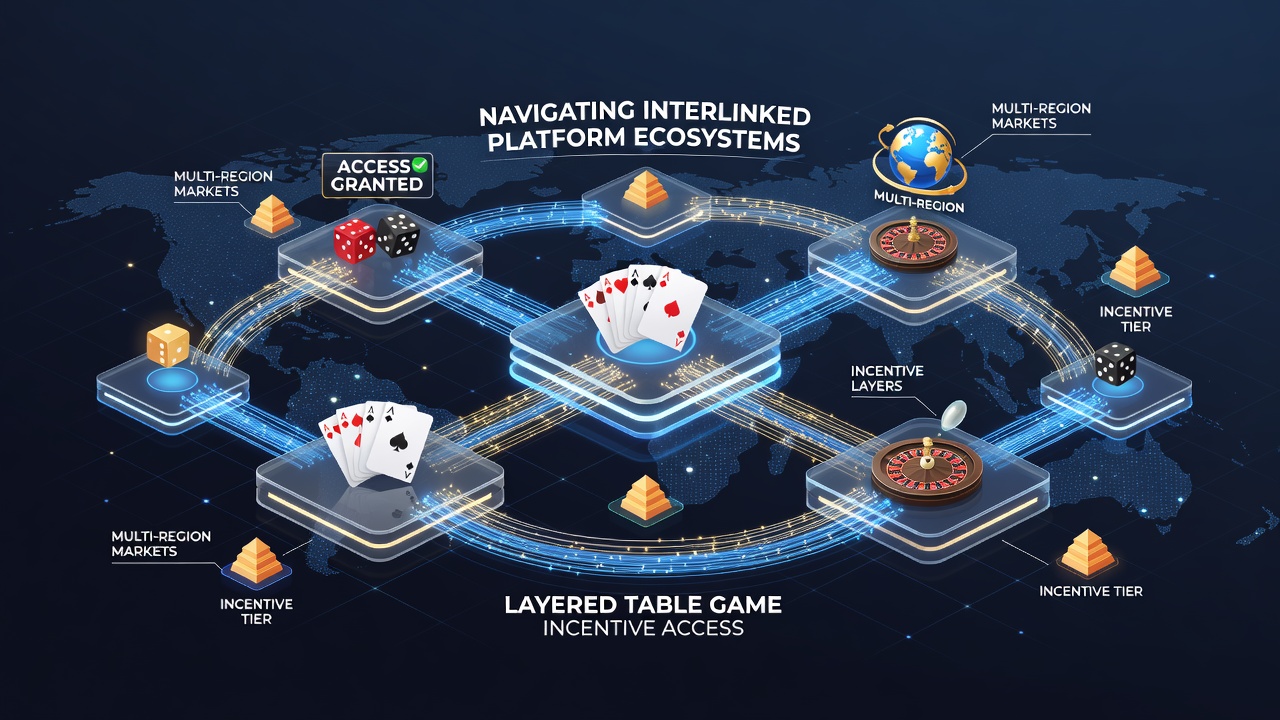
Navigating Interlinked Platform Ecosystems for Layered Table Game Incentive Access in Multi-Region Markets
Platform ecosystems in table games connect through shared protocols that allow players to access layered incentives across borders, and these systems rely on standardized APIs that synchronize data between operators in different jurisdictions. Research from industry bodies indicates that such linkages emerged prominently after 2023 as regulatory frameworks began to accommodate cross-platform verification methods, which in turn reduced duplication in account management processes.
Core Mechanics of Platform Interconnection
Operators integrate their systems using secure data exchange standards that verify player eligibility for incentives without requiring repeated submissions of documentation, and this approach draws on blockchain elements in some Asian networks while European platforms favor encrypted cloud-based ledgers. Data shows these connections enable sequential redemption of rewards where an initial deposit match on one platform unlocks tiered access to tournament entries hosted on partnered sites in separate regions.
Those who manage multi-region accounts observe that synchronization occurs through centralized player databases maintained by third-party service providers, which track activity across mobile and desktop interfaces simultaneously. In July 2026 several operators expanded these linkages following updates to data privacy agreements that aligned with new standards in both North American and Southeast Asian markets.
Regional Variations in Incentive Structures
North American platforms emphasize loyalty point accumulation that feeds directly into live dealer access programs, whereas Asian systems often prioritize high-volume play thresholds that unlock private table privileges through connected VIP networks. According to figures from the American Gaming Association, these differences stem from varying tax treatments on promotional credits that operators must navigate when bridging markets.
European operators maintain stricter separation between deposit-based rewards and tournament qualifications, which creates additional verification steps when users attempt to layer benefits across regions. Studies compiled by academic researchers at institutions tracking global gaming trends reveal that these procedural differences lead to distinct user pathways where timing of redemptions becomes critical for maintaining status progression.

Technical Navigation of Layered Access
Users sequence their activity by first completing verification on a primary platform then transferring eligibility tokens to secondary systems through integrated portals, and this process relies on real-time API calls that confirm compliance with regional wagering rules. Observers note that successful navigation often involves monitoring update logs published by platform administrators, since even minor changes in code requirements can interrupt the chain of incentive unlocks.
Multi-region markets introduce currency conversion layers that platforms handle through automated systems tied to daily exchange rates, which affects the effective value of layered rewards when moving between markets. Evidence from regulatory filings demonstrates that operators in interconnected ecosystems now provide dashboards displaying projected incentive values after conversion, reducing uncertainty for participants who operate across borders.
Regulatory Influences on Ecosystem Design
Authorities in different jurisdictions impose varying reporting requirements on incentive distribution that operators must reconcile when linking platforms, and this reconciliation occurs through compliance modules built into the shared infrastructure. Research indicates that jurisdictions with mature frameworks tend to facilitate smoother interconnections while emerging markets require additional testing periods before full integration activates.
Platform providers address these constraints by maintaining separate compliance teams for each region yet routing all player data through unified analytics engines that flag potential violations before rewards process. In practice this setup allows table game participants to maintain continuous access to layered benefits provided they adhere to the sequenced redemption schedules established by each connected operator.
Future Developments in Cross-Region Linkages
Industry reports project continued expansion of these ecosystems as more operators adopt common standards for player identification and reward tracking, which could further streamline access to table game incentives. Data compiled by Australian gambling research centers highlights ongoing trials of unified dashboards that consolidate views of benefits across all linked platforms regardless of geographic origin.
Conclusion
Interlinked platform ecosystems continue to evolve through technical and regulatory alignment that supports layered access to table game incentives in multi-region markets, and participants who understand the interconnection mechanics can maintain eligibility across systems by following established verification sequences. Ongoing updates in 2026 and beyond will likely refine these pathways as operators respond to shifting compliance landscapes.