Weather Fluctuations Drive Changes to Baccarat Promotion Tactics in Mediterranean Casino Resorts
Coastal casinos across the Mediterranean have long tracked how summer heatwaves and winter storm systems shift visitor volumes, and those same patterns now reshape the reward frameworks tied to baccarat tables in venues from Monaco to Malta. Operators adjust deposit-match percentages, tournament entry credits, and loyalty multipliers when tourism data reveals sustained drops in arrivals during extreme temperature swings or prolonged rain periods, because player traffic directly determines the profitability of high-stakes baccarat rooms.
Regional Tourism Data Sets the Stage for Adjustments
Figures compiled by Mediterranean tourism authorities show that a single week of unseasonal storms can reduce arrivals by 18 to 25 percent in affected ports, while extended heat alerts push cancellations higher among package-tour groups that traditionally fill casino floors during shoulder months. Casino marketing teams therefore monitor weekly occupancy reports from national statistics offices and recalibrate baccarat incentives within days of receiving updated forecasts. In practice this means lowering the threshold for VIP-tier qualification during cooler, wetter stretches so that remaining visitors still generate volume, then tightening those same thresholds once clear skies return and occupancy rebounds.
How Baccarat Structures Respond in Real Time
During periods of reduced footfall, properties extend the duration of rolling-chip programs and raise the cashback rate on losses from 0.6 percent to 0.9 percent for mid-tier players, moves designed to retain core baccarat action when tourist numbers dip. Conversely, when weather improves and occupancy climbs above seasonal averages, the same venues shorten promotional windows, cap maximum bonuses at lower levels, and shift emphasis toward tournament buy-ins that carry higher house edges. Observers at several Côte d'Azur properties note that these toggles occur automatically once internal dashboards flag a 15 percent deviation from projected daily table drop.
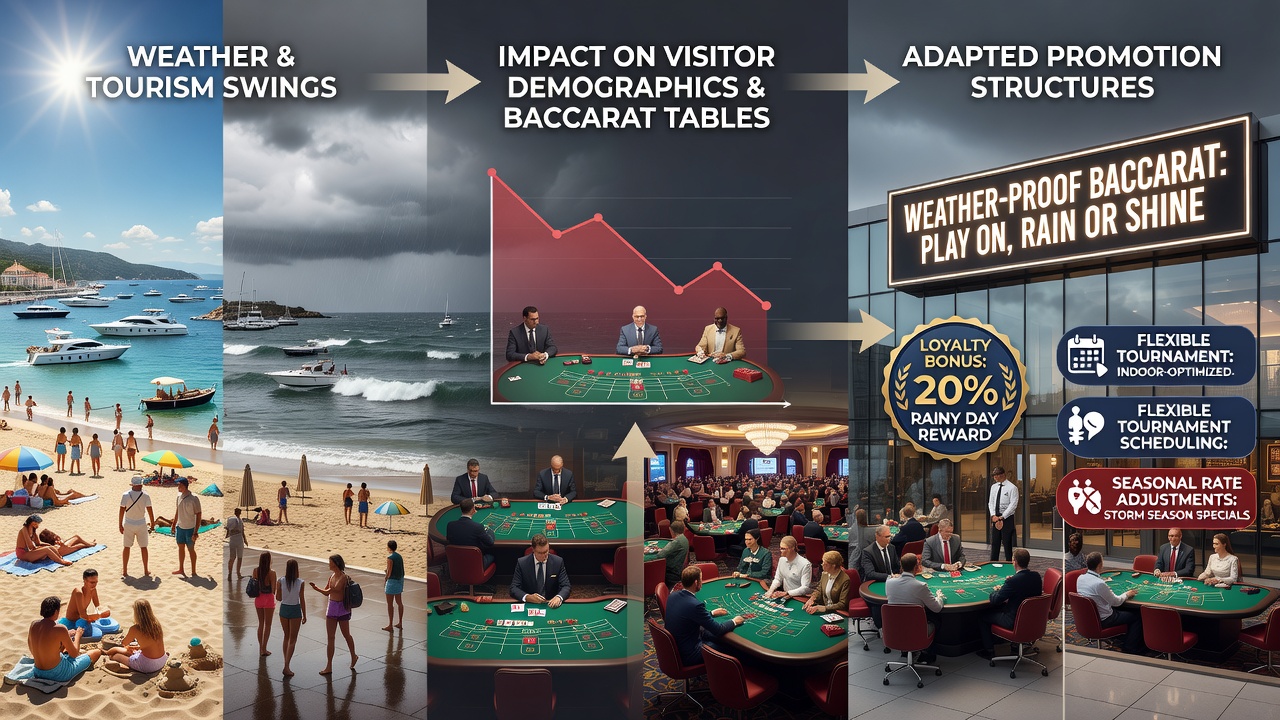
June 2026 provided a clear illustration: an early-month heat spike across southern Italy and Greece cut cruise passenger disembarkations by roughly one-fifth compared with the prior year, prompting two major casino groups to extend their standard 200 percent match offers through the final week of the month rather than ending them on schedule. Once temperatures moderated and bookings recovered, the same groups reinstated stricter play-through requirements within forty-eight hours.
Cross-Border Comparisons Reveal Consistent Patterns
Spanish regulators tracking Andalusian and Balearic properties report parallel behavior, with baccarat-specific reload bonuses scaled up during spring rain events that depress golf and beach tourism, then scaled back once visitor counts normalize. French authorities overseeing Riviera establishments document similar cycles, where the length of no-deposit trial chips offered to new baccarat registrants expands or contracts in tandem with hotel occupancy indices published by regional tourism boards. Maltese operators follow the same logic, though their island setting amplifies the effect because nearly all high-roller arrivals depend on reliable flight and ferry schedules that weather disruptions quickly sever.
Industry analyses from the European Casino Association indicate that these weather-linked recalibrations have become more frequent since 2023 as climate variability intensifies, forcing revenue teams to treat promotion calendars as dynamic rather than fixed seasonal documents. Data from that organization shows average bonus values for baccarat players rising 12 percent above baseline during documented low-tourism weather events and falling 9 percent below baseline during peak recovery weeks.
Player Segmentation and Targeted Offers
Casinos segment baccarat patrons by origin and booking channel, then apply different levers accordingly. Guests arriving through weather-sensitive package tours receive automatic extensions on wagering credits when forecasts predict rain, while independent high-net-worth travelers see their tiered cashback percentages adjusted based on real-time table occupancy rather than calendar dates. This granular approach prevents over-distribution of incentives during unexpected surges and maintains engagement when broader tourism metrics signal contraction.
Conclusion
Weather-driven tourism swings therefore function as an external input that Mediterranean casino operators feed directly into baccarat promotion algorithms, producing measurable shifts in bonus percentages, qualification thresholds, and redemption windows. As long as climate patterns continue to influence arrival statistics, these adaptive structures will remain a core component of revenue management across the region.